
On Wednesday, England was awarded a penalty against the Netherlands for a challenge by Denzel Dumfries on Harry Kane. Why was it given, and was it the right decision?
Analyzing the penalty decision: Dumfries vs. Kane
What happened: In the 14th minute, England was on the attack when Harry Kane attempted a shot from a bouncing ball, which went over the bar. After releasing the shot, he was caught by Netherlands defender Denzel Dumfries and went down in pain. Referee Felix Zwayer initially signaled for a goal kick, but it soon became evident that the VAR was reviewing the incident for a potential penalty.
VAR decision: Penalty, which Kane successfully converted.
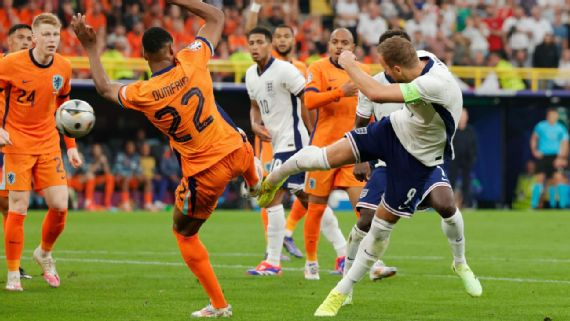
VAR review: In football, there’s an unwritten rule that if a player manages to complete a shot on goal and is then caught by a defending player, it usually doesn’t result in a penalty. The reasoning is that the attacking team has already had the chance to shoot, so the move is considered over.
It may seem strange because in most other situations, such a challenge would be a foul elsewhere on the pitch. However, the threshold for awarding a penalty is much higher compared to awarding a free kick in a less dangerous area.
So, why did England get a penalty in this case?
VAR official Bastian Dankert, who has officiated more games in the tournament than any other video assistant, deemed Dumfries’ challenge reckless because he led with his studs and did not attempt to kick through the ball. This recklessness, which led to Dumfries being booked, is why the penalty was awarded. In instances where a defender’s challenge after a shot is considered reckless or dangerous, a penalty can be given.
Can this be seen as a penalty? Yes.
Does it meet UEFA’s high threshold for a clear and obvious error required for VAR intervention? No. It seems likely that Kane’s reaction, going down in pain, influenced the VAR’s decision.
In UEFA competitions, it is rare for a VAR intervention to be overturned by the on-field referee at the monitor.