
Sheikh Hasina’s Resignation
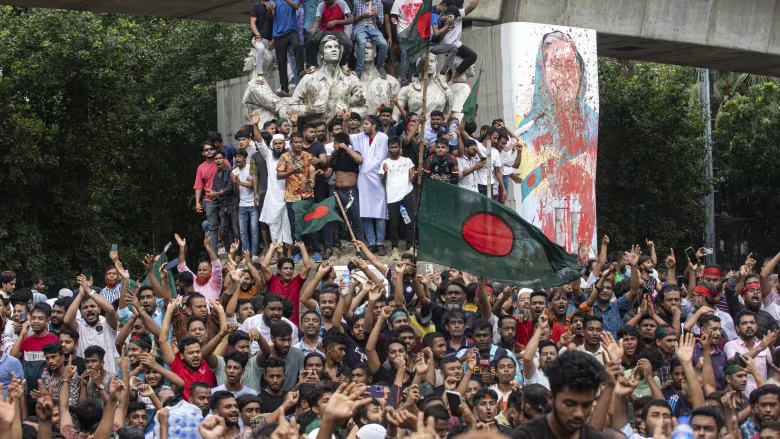
On Monday, Sheikh Hasina resigned as Bangladesh’s Prime Minister after 15 years in power. Thousands of protesters defied a military curfew and stormed her official residence, prompting her to leave the country. Reports indicate she boarded a military helicopter, heading either to West Bengal or Tripura in India.
Military’s Response and Investigation
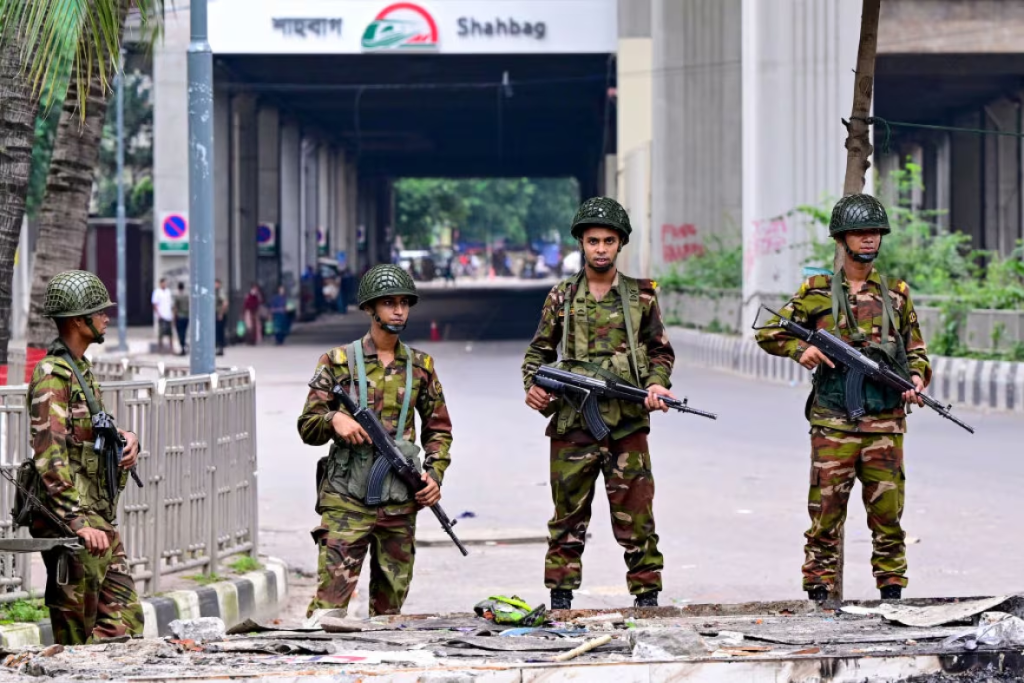
Gen. Waker-uz-Zaman, the military chief, announced the formation of an interim government and promised an investigation into the violent crackdown during the protests. He assured that no further firing by the army or police would occur and urged citizens to remain calm and supportive.
Origins of the Protests
The protests started peacefully in late June, with students opposing a quota system that reserves up to 30% of government jobs for the descendants of 1971 war veterans. The situation escalated when clashes broke out between protesters, police, and pro-government activists at Dhaka University.
Escalation and Violence
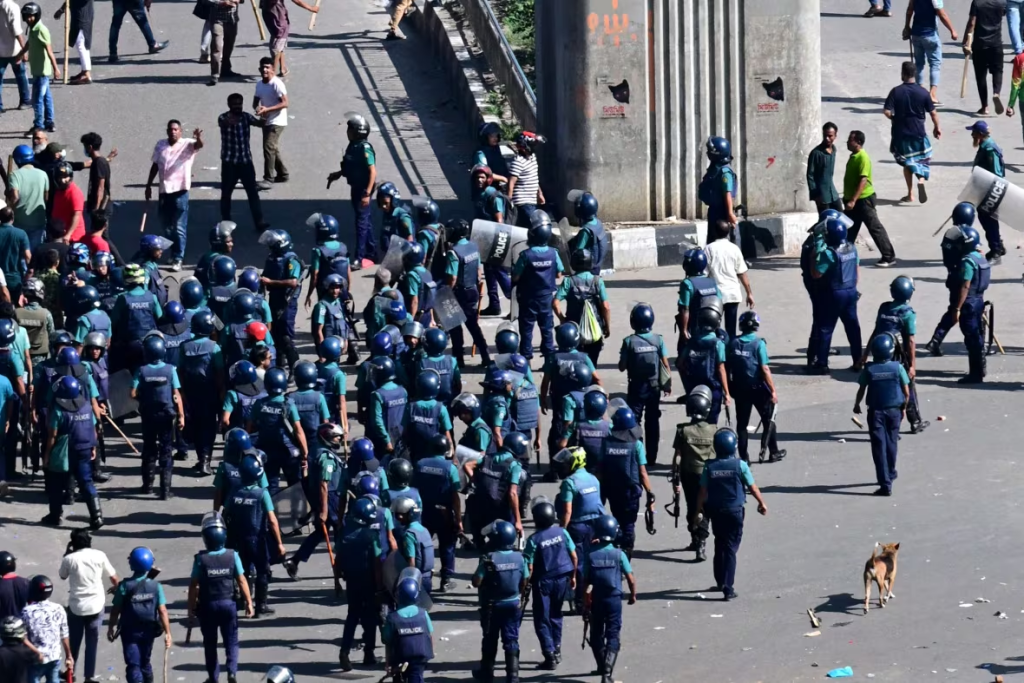
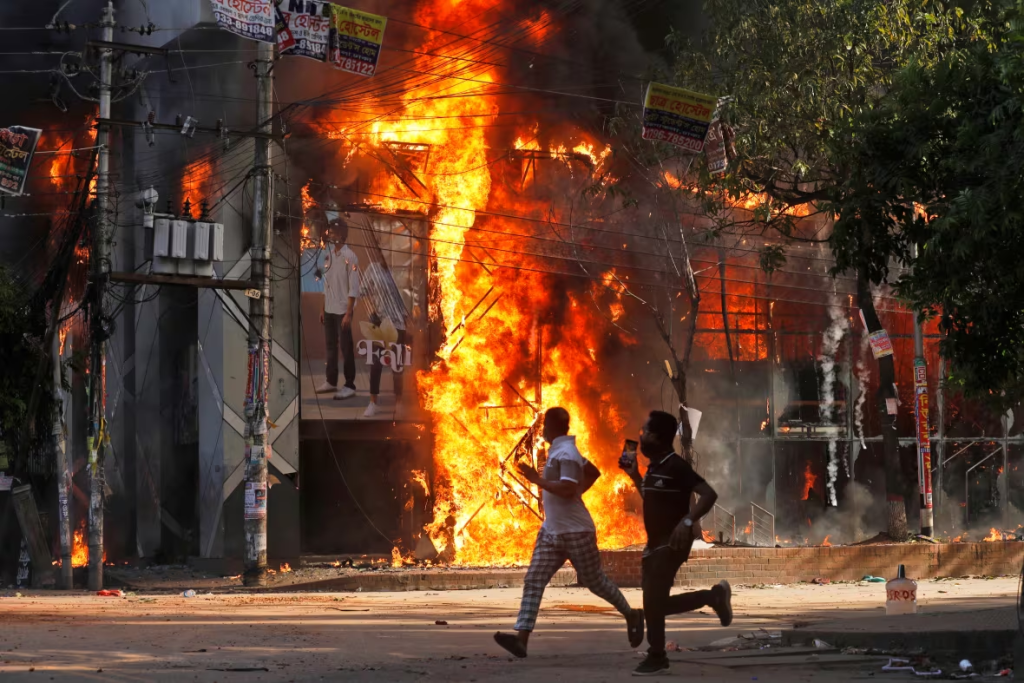
The protests turned violent, leading to nearly 300 deaths, including at least 14 police officers, and hundreds of injuries. The government’s response included curfews, internet shutdowns, and a crackdown on demonstrators, which only fueled further outrage.
Government and Opposition Reactions
The Awami League party, led by Hasina, claimed that the protests were hijacked by opposition groups. Hasina’s party argued that the call for her resignation was politically motivated by the Bangladesh Nationalist Party and Jamaat-e-Islami.
Impact on Bangladesh
The unrest has led to the arrest of around 11,000 people and the closure of schools and universities. The Supreme Court’s decision to reduce the veterans’ quota to 5% and allocate 93% of jobs based on merit was accepted by the government, but the protests continued with demands for accountability.
Future Outlook
As Bangladesh transitions under interim leadership, the country faces significant challenges in restoring peace and addressing the grievances of its citizens. The investigation into the violent crackdown will be closely watched, with many hoping for a resolution that addresses the underlying issues of the protests.