
Israel has announced the killing of a top Hezbollah commander, Fuad Shukr, following an airstrike on a southern suburb of Beirut, Lebanon’s capital. The Israeli military described the operation as an “intelligence-based elimination.”
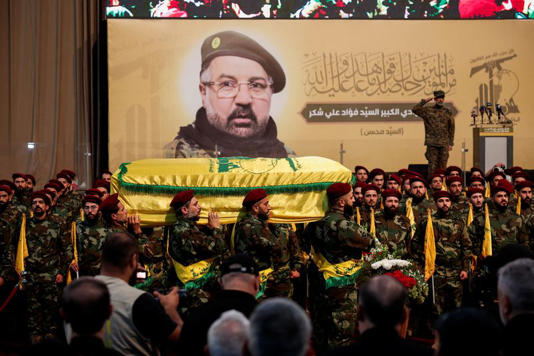
While Hezbollah has yet to confirm Shukr’s death, they acknowledged that he was in the building targeted during the strike. According to Israeli officials, Shukr was responsible for a recent rocket attack on the Golan Heights, which resulted in the deaths of 12 people, including children. Hezbollah has denied any involvement in this incident.
In a statement, Hezbollah mentioned that efforts were ongoing to clear the rubble from the building in Daniyeh, a Hezbollah stronghold, and they were awaiting further results. They reported several fatalities from the attack.
Lebanese Prime Minister Najib Mikati condemned what he termed “blatant Israeli aggression,” calling it a “criminal act” that violated international law by targeting civilians.
Israeli Defence Minister Yoav Gallant, in a social media post, stated that “Hezbollah crossed the red line.” An Israeli official confirmed to CBS News that the US was notified in advance of the Beirut strike.
Fuad Shukr, allegedly a senior adviser to Hezbollah leader Hassan Nasrallah, has been on the US radar with a $5 million reward for information leading to him, due to his alleged role in the 1983 bombing of a US Marines barracks in Beirut that killed 241 US military personnel.
The airstrike hit Haret Hreik, a densely populated and heavily fortified area of Dahiyeh, surrounded by Hezbollah checkpoints.
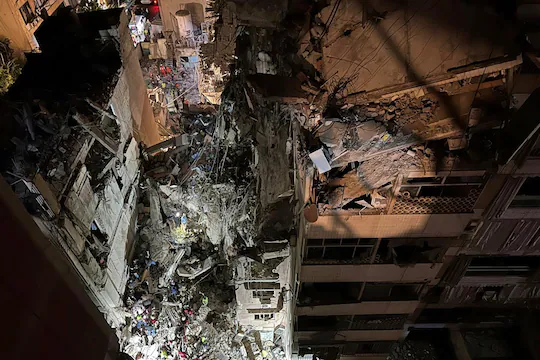
Following the strike, White House press secretary Karine Jean-Pierre conveyed President Joe Biden’s hope to avoid a wider conflict between Israel and Hezbollah, stating, “We do not want to see an escalation, we do not want to see an all-out war.”
Earlier, Israeli officials indicated a desire to avoid dragging Lebanon into a full-scale war, despite aiming to impact Hezbollah. The Israeli Defense Forces (IDF) indicated no new shelter instructions for Israelis, suggesting they did not expect an immediate significant reaction from Hezbollah.
The airstrike followed a deadly rocket attack on the Israeli-occupied Golan Heights, where 12 people, mostly children, were killed on a football pitch in Majdal Shams. Israel blamed Hezbollah for the attack, which the group denied.
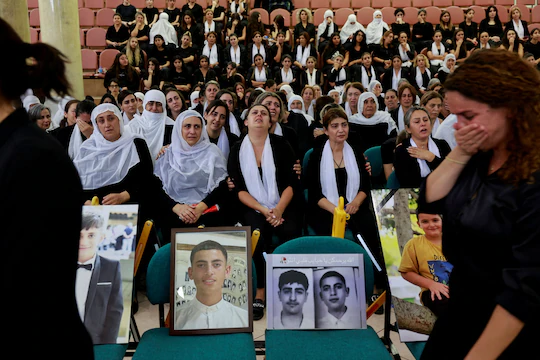
This incident marks the deadliest near the Israel-Lebanon border since the escalation of hostilities between Israel and Hezbollah in October, following Hamas’ attack on Israel on October 7. Hezbollah, supporting Hamas, opened a limited second front in Israel’s north, leading to ongoing exchanges of fire.
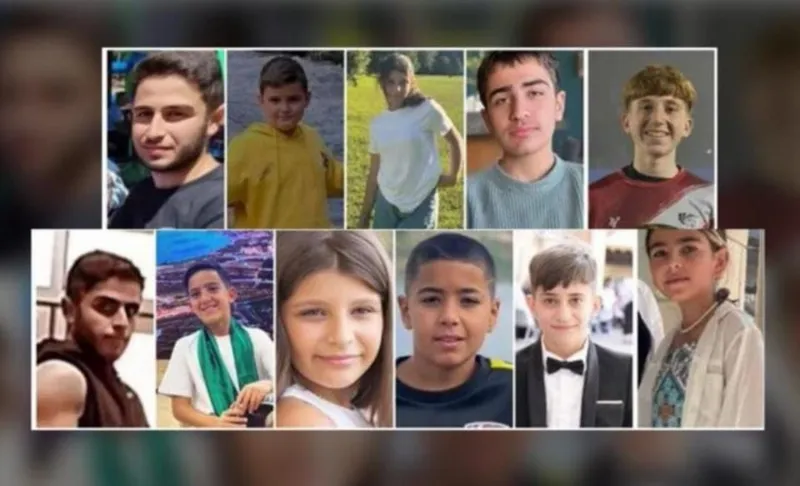
Amid escalating tensions, world leaders have urged restraint to prevent an all-out war. The UK Foreign Secretary advised British nationals to leave Lebanon immediately to avoid becoming trapped in a potential warzone. UK officials, including David Lammy and Defence Secretary John Healey, have traveled to Qatar to push for de-escalation and efforts to end the conflict in Gaza, emphasizing the importance of mediation to bring peace.